
Species & material encyclopedia
Hardwood species, materials, and the facts that actually matter.
A homeowner-friendly hardwood reference hub for Prescott homeowners comparing species, construction, hardness, and maintenance context.
Direct answer
Use these pages to compare hardness, grain, color variation, and care needs before you narrow the look you want. The numbers are a useful starting point; the best choice still has to fit the real room, product, and finish plan.
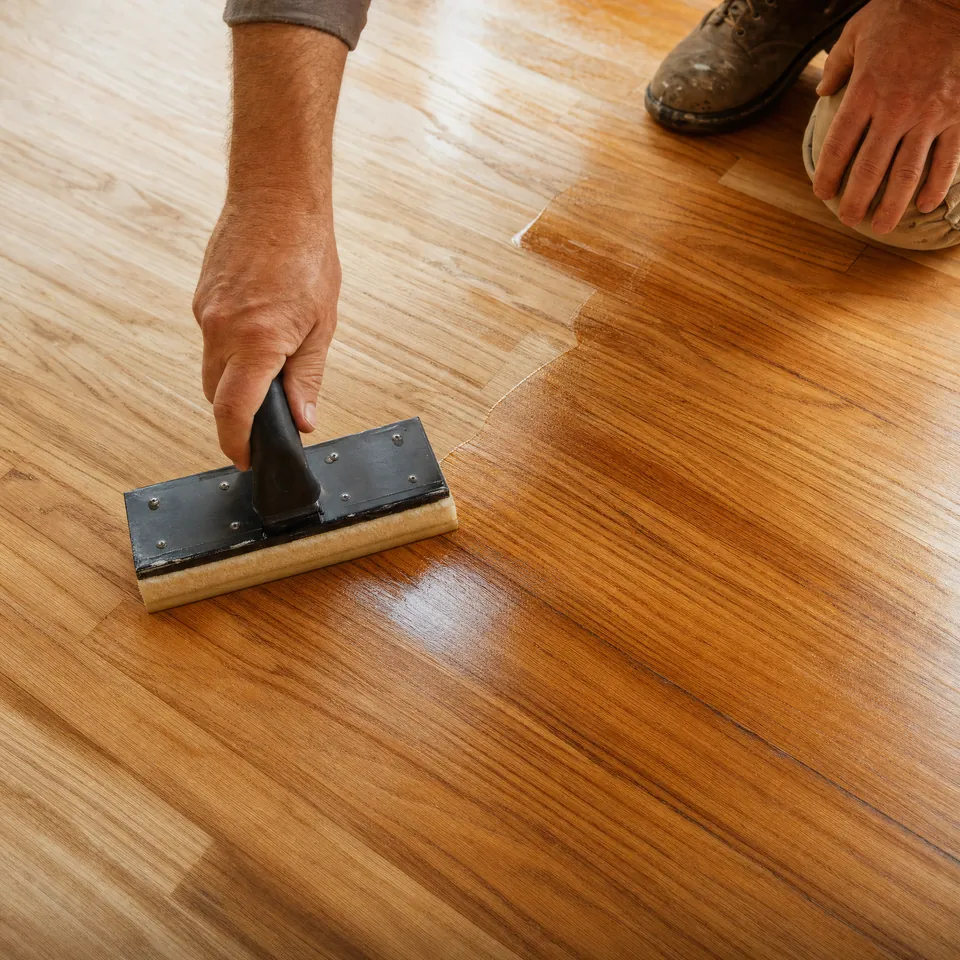
Start with the floor
Good decisions begin with what you can see.
This PHR-supplied floor photo is here to give the guide a real wood reference. It does not diagnose your floor or promise the same look. The details below help you ask better questions about your own home.
What Janka numbers can tell you
Janka measures a small indentation in wood. It helps you compare named species when the source shows the test context next to the number.
- A higher number helps you compare wood. Your finished floor will still need care.
- Hickory and pecan cover several wood types, so look for the exact type instead of one catch-all number.
- Color, grain, and texture vary naturally and cannot identify a species from a photograph alone.
Wood responds to indoor conditions
Wood is hygroscopic: it exchanges moisture with its surroundings. The useful homeowner question is not which species is “Arizona-proof,” but whether the finished home maintains stable indoor conditions and the selected product documentation fits the project.
- Use the flooring and finish manufacturer’s current instructions for an identified floor.
- Document room conditions, subfloor, construction, and existing finish before choosing a repair or refinishing path.
- No outdoor climate statistic can diagnose a room’s indoor moisture or confirm a product choice.
Species records you can use
These pages keep the source and test context beside each record, so you can compare species with more than a sales claim. Bring the looks you like to your visit and we’ll talk through the actual project.
- Red Oak: read the measured-property record
- White Oak: read the measured-property record
- True Hickory: read the measured-property record
- Hard Maple: read the measured-property record
- Black American Walnut: read the measured-property record
- White Ash and Black Ash: read the measured-property record
- American Black Cherry: read the measured-property record
- Yellow, Sweet, and Silver Birch: read the measured-property record
- Pecan and True Hickory: read the measured-property record
- Sessile and English Oak: read the measured-property record
Sources & references Reference table and citations
| Reference wood | Janka value | What the source supports |
|---|---|---|
| American white oak | 1,360 lbf | Straight grain; medium-to-coarse texture; natural color variation. |
| Red Oak (Carmona et al. lab mean) | 6.1 kN, about 1,371 lbf | A clear-wood lab mean from the dedicated Red Oak record, not a universal number for every red-oak grouping. |
| American hard maple | 1,450 lbf | Hard maple is distinct from soft maple; color can change with light exposure. |
| American black walnut | 1,010 lbf | Color and grain variation; good dimensional stability when dry. |
| American cherry | 950 lbf | Fine grain; color changes with light exposure; qualified traffic-use context. |
- USDA Forest Products Laboratory — Wood Handbook: Mechanical Properties
- USDA Forest Products Laboratory — Moisture Relations and Physical Properties
- Carmona et al. (2020) — Red Oak and White Oak clear-wood properties
- American Hardwood Export Council — American Hardwood Species
- National Wood Flooring Association — Problem Prevention
Last reviewed: October 6, 2026. Exact products, prices, and project choices should always be checked against current information and the real floor.