
Species guide
True Hickory: what the numbers tell you.
What Purdue Extension data can tell you about True Hickory.
Direct answer
Purdue Extension lists a density range for True Hickory. It also says this group has high drying shrinkage. Those are lumber facts. They do not tell us how one floor will move or wear.
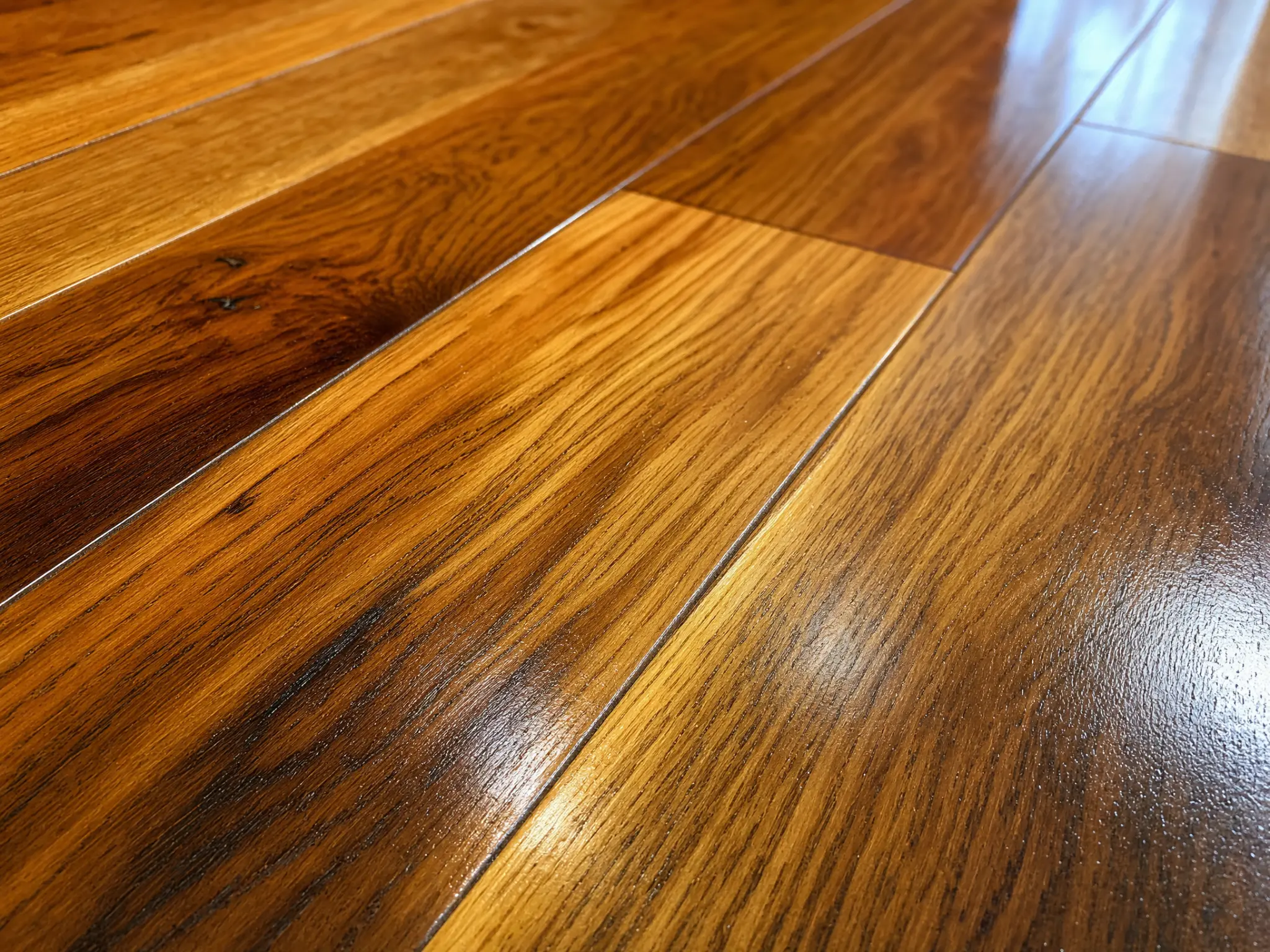
See the wood, then read the numbers
A photo can show character. It cannot prove the species.
Use the measured record below to compare the named wood. Then compare real samples in the room where the floor will live.
How to read these figures
True Hickory is a group, not one board. The source compares lumber groups. It does not cover your room, product instructions, or project.
Sources & methodology Peer-reviewed measurements and study context
These figures come from clear-wood laboratory data in the cited peer-reviewed study. They help you compare species; your own floor’s construction, finish history, and condition still matter.
| Metric | Reported value | Context |
|---|---|---|
| Density at 12% moisture content | 50–78 lb/ft³ | Reported for true hickories by Purdue Extension; pecan hickories are treated separately. |
| Drying shrinkage | Greatest among dense domestic hardwoods | Qualitative Purdue Extension description; not a gap-width or acclimation prediction. |
| Natural decay resistance | No resistance reported | Lumber-property context; not an installed-floor water-performance claim. |
| Commercial use | Flooring is listed among uses | A listed general use. Ask us what fits your floor. |
Reviewed October 6, 2026. The paper measures clear wood in a lab. At your visit, we look at the real floor, room, and project plan.