
Species guide
Black American Walnut: what the numbers tell you.
What Black Walnut facts can tell you about a floor.
Direct answer
NWFA lists a Janka number of 1010 for Black Walnut. It also lists density and shrinkage figures. These numbers help compare wood. They do not tell us how your floor will dent, wear, or look after refinishing.
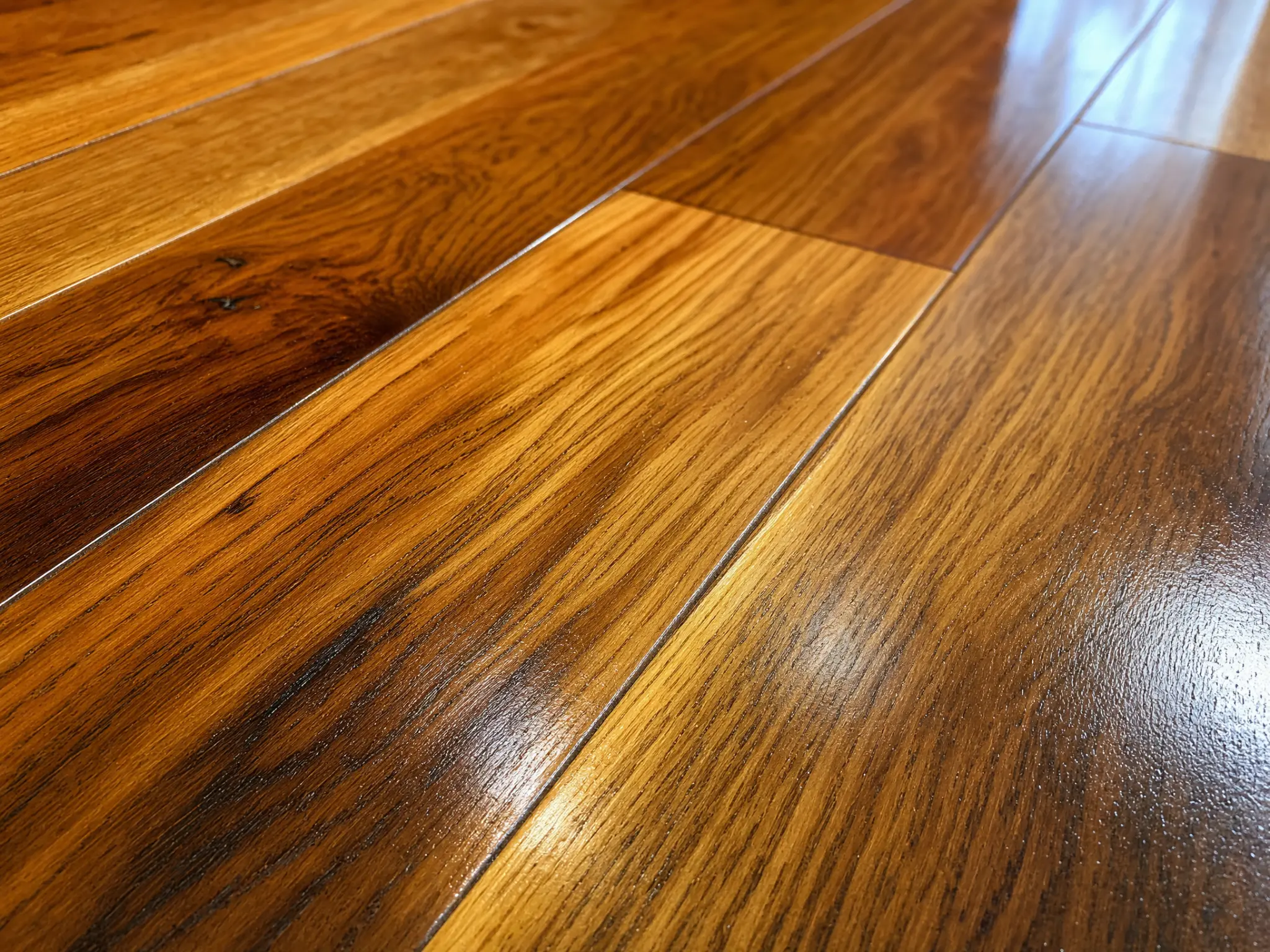
See the wood, then read the numbers
A photo can show character. It cannot prove the species.
Use the measured record below to compare the named wood. Then compare real samples in the room where the floor will live.
How to read these figures
Walnut can show heartwood and sapwood color changes. The wood can vary from board to board. The source cannot tell us how one room or floor will look after work.
Sources & methodology Peer-reviewed measurements and study context
These figures come from clear-wood laboratory data in the cited peer-reviewed study. They help you compare species; your own floor’s construction, finish history, and condition still matter.
| Metric | Reported value | Context |
|---|---|---|
| NWFA Janka value | 1010 | A standardized material measurement, not a lived-wear prediction. |
| Specific gravity | 0.55 | NWFA published figure. |
| Shrinkage from green to oven dry | 5.5% radial / 7.8% tangential | NWFA’s dimensional-stability context. |
| Sanding context | Sander marks may show more | NWFA notes sanding can be difficult because of density and discusses higher-grit work; not a PHR process claim. |
Reviewed October 6, 2026. The paper measures clear wood in a lab. At your visit, we look at the real floor, room, and project plan.