
Finish systems · Homeowner guide
Oil vs. Waterborne Hardwood Finishes: What to Compare
A plain look at oil and waterborne hardwood finishes, and what you actually need to check before choosing one.
Direct answer
Oil and waterborne hardwood finishes aren't simply 'better' or 'worse' than each other. In general, water-based finishes usually dry clear and dry fast. Oil-based finishes usually dry amber-colored. Both can hold up well over time, according to the National Wood Flooring Association (NWFA). The exact color, fumes, dry time, recoat time, full cure time, and what the product can be used on all depend on the specific product and your floor. Check the actual product's paperwork and look at a real sample — don't assume one brand's numbers apply to every finish.
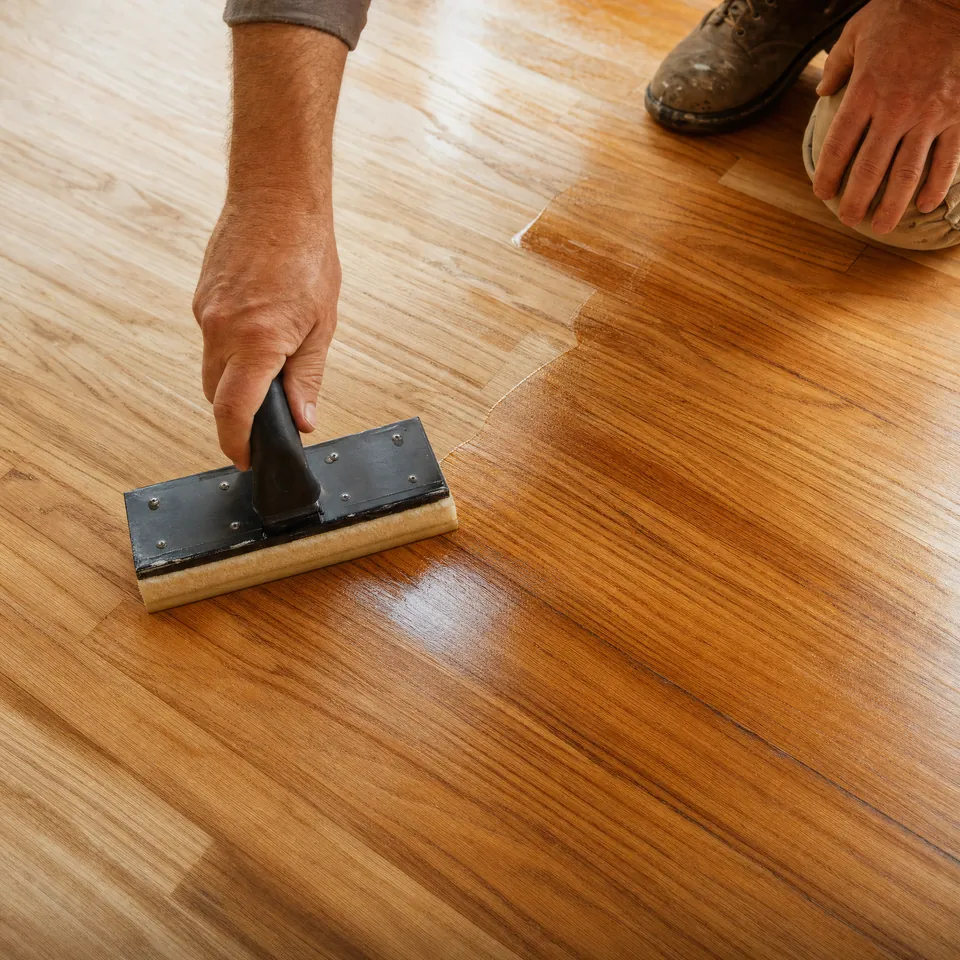
A closer look at wood
Every floor has details worth seeing.
This PHR-supplied floor photo shows wood detail, not a promise about your home. Use the guide below to understand the question, then look at the actual floor before you choose a path.
Know the exact product before comparing
'Oil versus waterborne' is a broad comparison, not a full product spec sheet. The word 'oil' alone can mean an oil-modified polyurethane, a penetrating oil, or something else entirely. The real starting point is the exact product name and its current instructions and safety sheet.
What the general descriptions tell you
NWFA describes water-based finishes as usually clear and fast-drying, and oil-based finishes as usually amber-colored; it says both can be very durable. Those are general, careful descriptions — not a promise about how a specific product will look, smell, cost, or perform in your home.
'Dry' and 'fully cured' aren't the same
One waterborne example, Bona Traffic HD, tells users its dry time is different from its full cure time of about three days. During that cure window, the floor can still scuff or get marked more easily. That timing applies to that one product — not to every waterborne finish, every oil finish, or any specific PHR project.
- Always check the current instructions and safety sheet for the exact product being used.
- Temperature, humidity, wood type, prep work, and the existing floor can all change how a product actually behaves.
- A sample or test patch is a decision about that one product — not a rule you can apply online to any floor.
Fumes and air-quality claims depend on the product
The EPA says that fumes from paints and finishes affect people differently depending on the chemical and how much you're exposed to, and advises following the label and using good ventilation. One product's fume rating is not a full measure of your indoor air, and it's not a health guarantee. 'Water-based' doesn't mean fume-free, and 'oil-based' doesn't mean one fixed exposure level either.
Sources & methodology Read the underlying guidance
Make the next step practical
See your starting price, then look at the floor together.
This guide helps you get started. Your in-home visit is where we look at the floor, talk through your goals, and build the written plan.