
Floor problems · Homeowner guide
Why Hardwood Floors Develop Seasonal Gaps
Why gaps can open as indoor air dries, when they often close, and why no online gap-width rule can diagnose a floor.
Direct answer
Small gaps between wood boards often show up when indoor air gets drier. As the wood loses moisture, it shrinks. The National Wood Flooring Association says most seasonal gaps disappear when indoor moisture comes back. That does not make every gap normal. Gaps that stay open in humid months, or show up beside other floor changes, need an in-person look. There is no universal online gap-width rule.
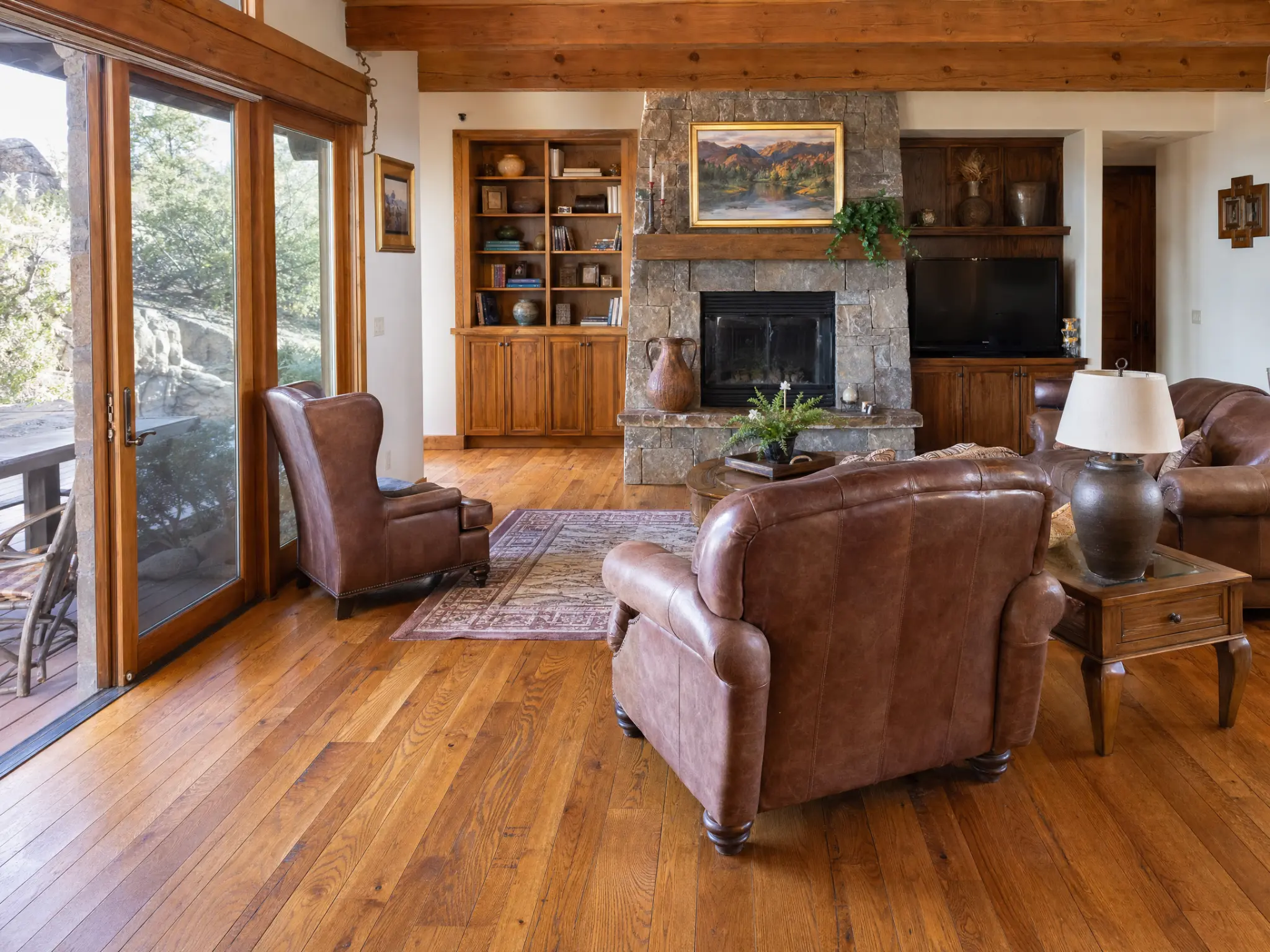
A closer look at wood
Every floor has details worth seeing.
This PHR-supplied floor photo shows wood detail, not a promise about your home. Use the guide below to understand the question, then look at the actual floor before you choose a path.
Why gaps can appear
Wood takes on and gives off moisture as the air around it changes. The U.S. Forest Products Laboratory calls wood hygroscopic. When indoor air gets drier, boards can lose moisture and shrink. The National Wood Flooring Association says this commonly creates gaps during dry months, especially when heating lowers indoor humidity.
Why one floor can move more than another
Board width, wood species, and how a board was cut can all affect seasonal movement. Under the same conditions, wider solid-wood boards generally show more change than narrower boards. That is useful context, not a way to predict what will happen in one room.
Do not fill a dry-season gap by guesswork
A normal seasonal gap can close as indoor moisture returns. NWFA warns that filling a dry-season gap can damage board edges when the wood expands again. Do not choose filler or a repair plan from a photo or an online rule.
When a gap needs more than a guess
Gaps that stay open in more humid months may have a different cause. The source guidance says a proper assessment compares indoor temperature, relative humidity, flooring moisture content, the season, and the floor's history. That is more useful than judging a floor by one gap or one online measurement.
Keep household humidity advice in context
EPA's general guidance for moisture and mold control is to keep indoor humidity below 60%, ideally between 30% and 50%. That is general household guidance, not a wood-floor product specification or a diagnosis for a Prescott-area home. Follow the current instructions for the exact floor product in your home.
Make the next step practical
See your starting price, then look at the floor together.
This guide helps you get started. Your in-home visit is where we look at the floor, talk through your goals, and build the written plan.